Some German verbs look like twins, but you cannot swap them. In this lesson Luzi explains ten verb pairs that confuse almost every A1 beginner, from sagen and sprechen to kennen and wissen, with clear rules, example sentences and a bonus tip on leben and wohnen. Even if you are A2 or higher, you w...
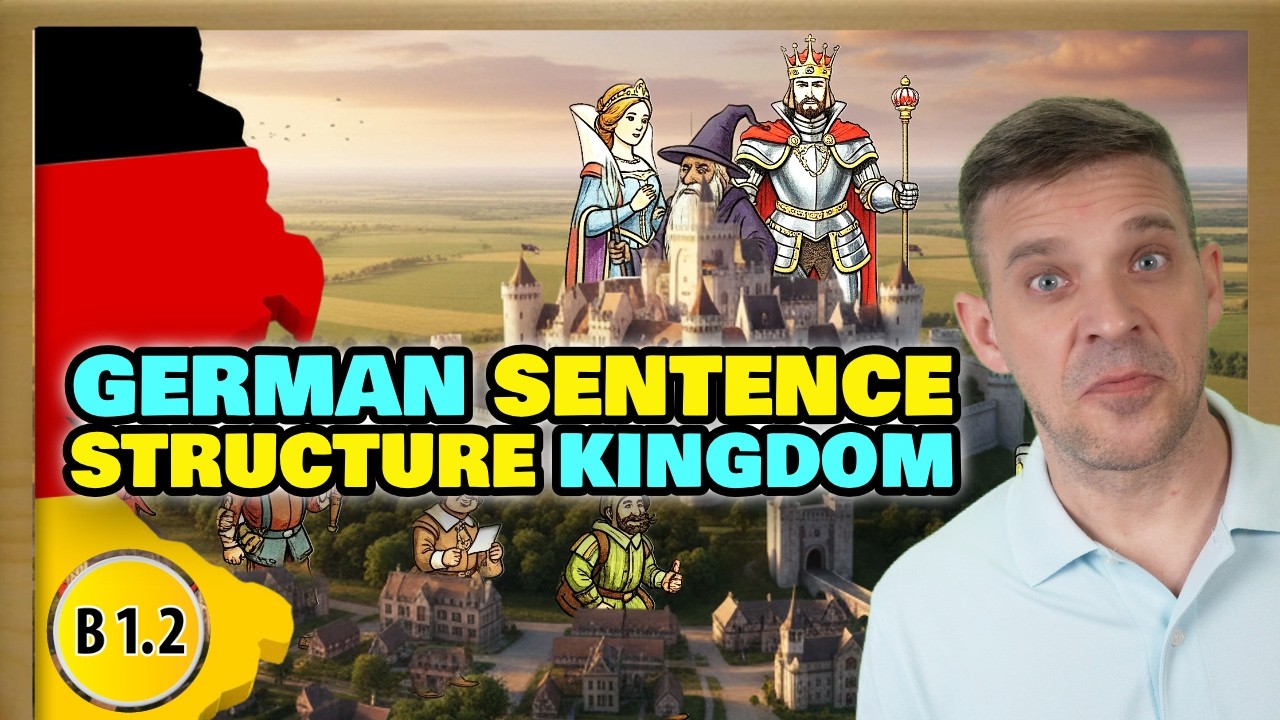
Every kingdom has a king, a queen, knights, advisors — and a magician. In this lesson, we use the "German Sentence Structure Kingdom" to make word order finally click: who the characters are, why the magician (a personal pronoun) outranks almost everyone, and the three practical rules that work fa...
Das ist kein Apfel, sondern eine Birne. — That's not an apple, but a pear. 🍐 "Sondern" is one of those small German words that trips learners up because English only has one word, "but," for two different jobs. In this lesson, we break down exactly when to use sondern instead of aber, with the rul...
Ich spiele Fußball am Samstag. Sounds fine, right? Not in German — it's one of the most common Satzbau (sentence structure) mistakes A1 and A2 learners make. 😅 In this lesson, we go through 20 of the most common German word order mistakes, from where the verb goes to where "nicht" belongs, with th...
Ausgeben, verbringen, or verschwenden — which one do you use when you want to say "to spend" in German? 🤔 In this video lesson, we break down three German verbs that get mixed up constantly. Ausgeben and verbringen both translate to "to spend" in English, but they are NOT interchangeable in German...
The Genitiv: not so important? Falsch! The Genitiv is not going anywhere, and if you want to understand, read, write and speak proper German, you need it. In this B1 lesson you learn what the Genitiv does, how to build it, the genitive articles, when to add -s or -es, and how Germans really talk i...
"Wie sagt man das auf Deutsch?" That one question already contains the word of this lesson: man. The German indefinite pronoun man is one of the most useful words at A1 and it makes you sound much more natural. In this lesson you learn what it means, why it is not the same as du, how to conjugate ...
Does the T-shirt fit, or does it suit you? Many learners mix up passen and stehen because both are used when you talk about clothes. In this A2 lesson you learn the difference (size versus style), the Dativ pattern both verbs share, useful adjectives like zu eng and zu weit, and the other everyday...
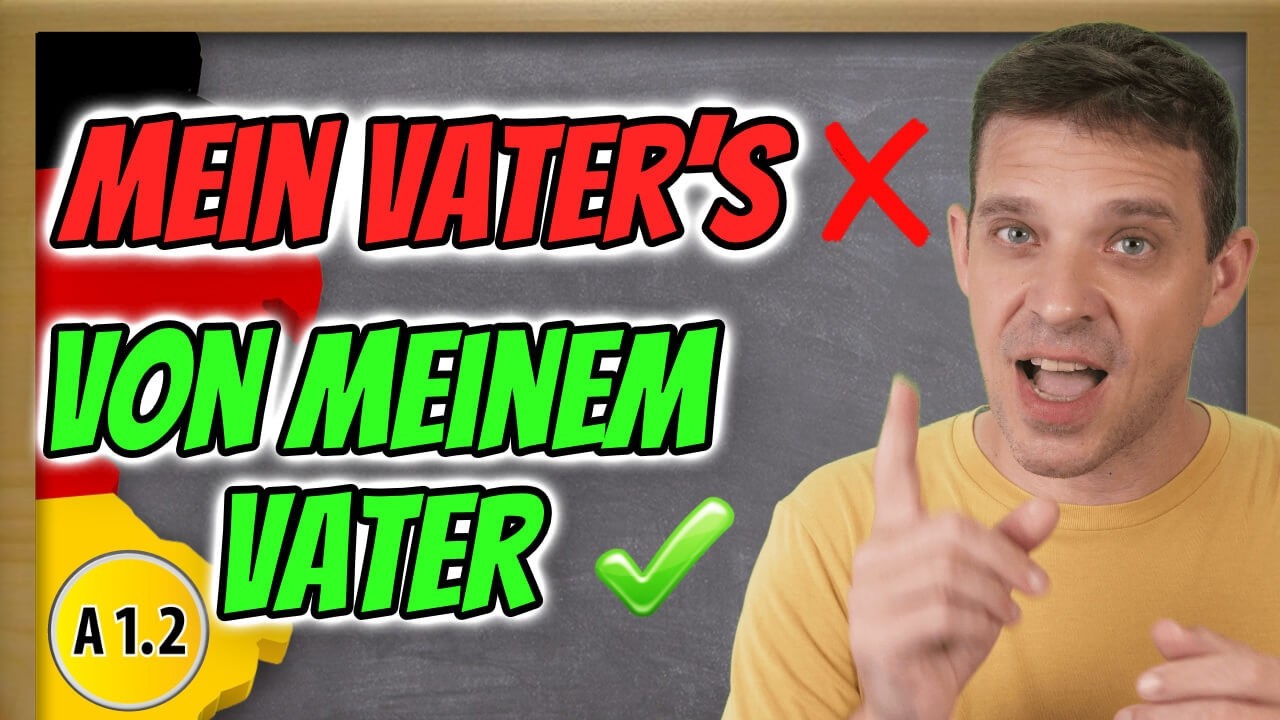
Mein Vater's Auto? Stop! In German this apostrophe is wrong. English speakers often put an apostrophe before the s to show possession. In German that is a mistake. In this lesson you learn the two simple ways to say who something belongs to: the von-construction and names with -s, plus the rule fo...

Sorry, ich bin gerade beschäftigt. Ich bin gleich fertig. Gerade and gleich are very common in everyday German, and they are easy to mix up. In this lesson, Luzi from YourGermanteacher explains the simple difference: gerade is about now or just now, gleich is about a moment from now.
gerade: Right...